If you know (and everyone you know knows) you talk about music too much . . .
If you ever had the urge to cover a driveway or sidewalk with chalk drawings of band logos, song names, and lyrics . . .
If you credit music for getting you through your toughest times and hardest heartbreaks . . .
If you frequently have the urge to blast music while driving (or while riding in a car if you’re like me and can’t drive) and sing along at the top of your lungs . . .
If you remember your life by what albums you were listening to when and understand your life through lyrics . . .
If you were the kind of kid who answered parental questions about how the latest visit to the doctor’s office went with what songs you heard while in the waiting room . . .
If you love the 60 Songs that Explain the ’90s podcast (now 60 Songs that Explain the ’00s) or would listen to a similar podcast for your specific favorite music decade . . .
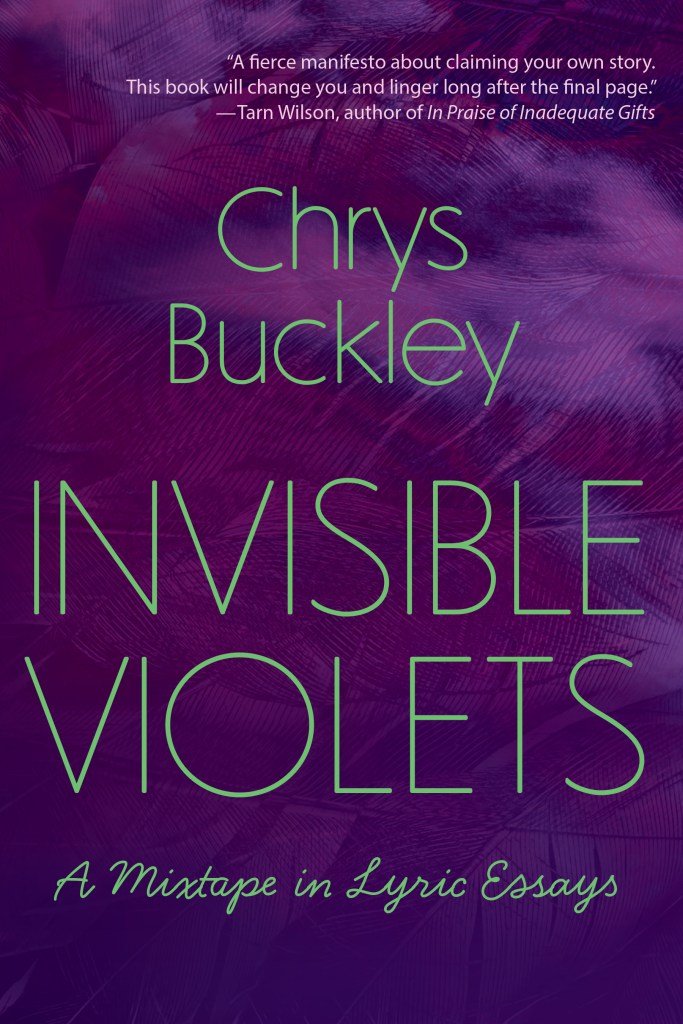
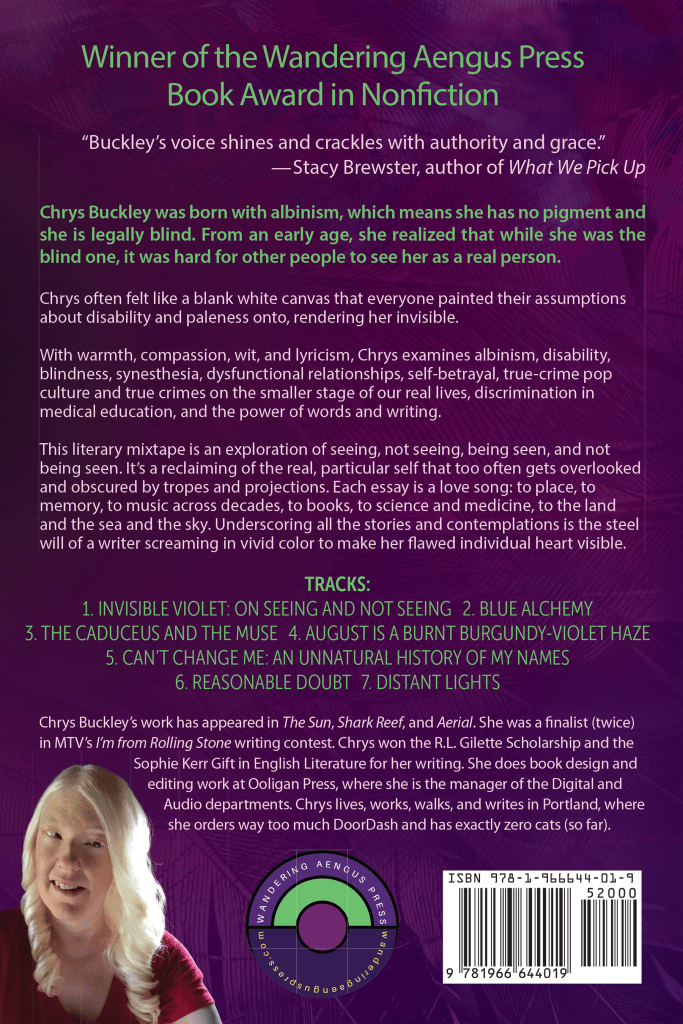
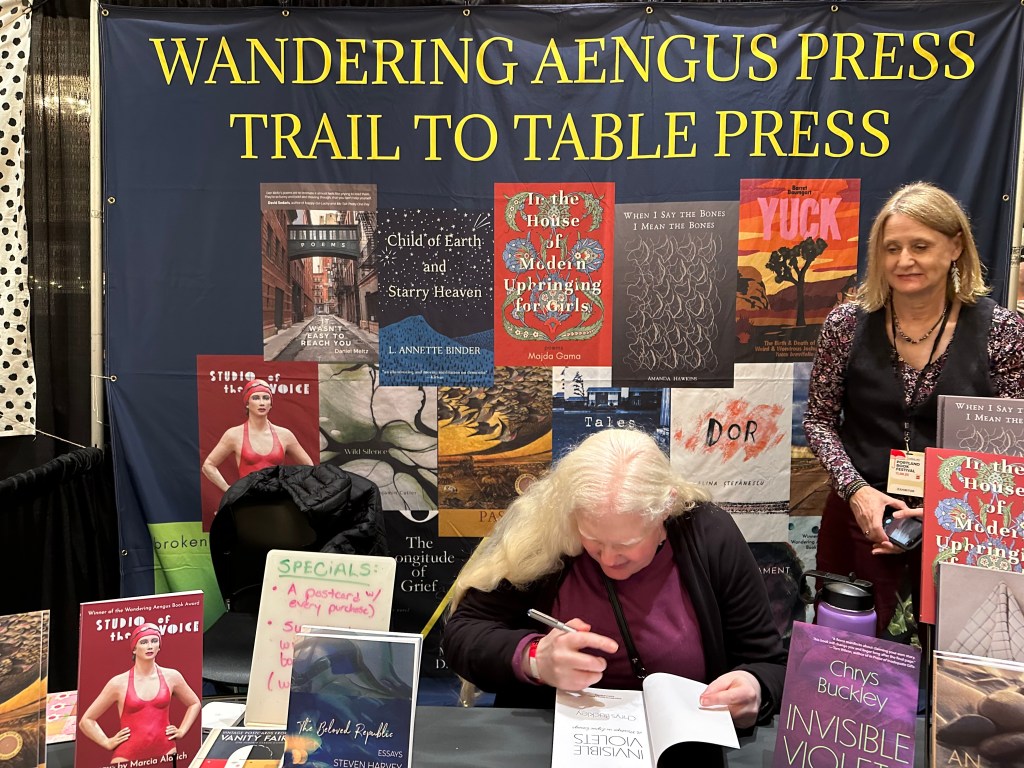
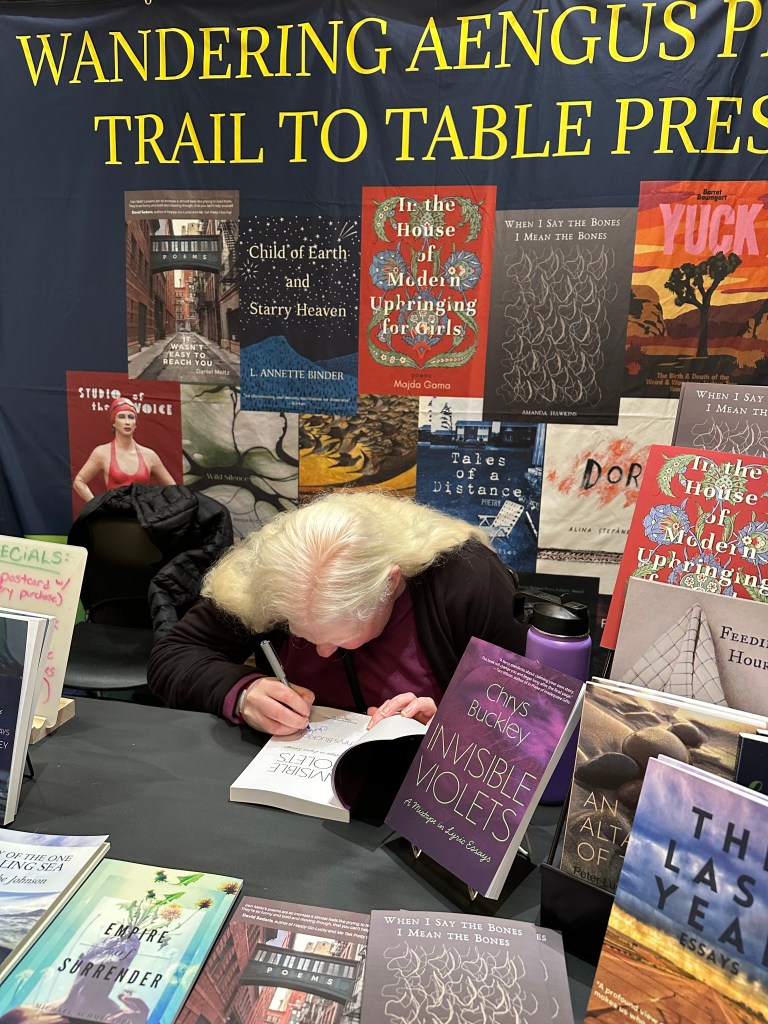
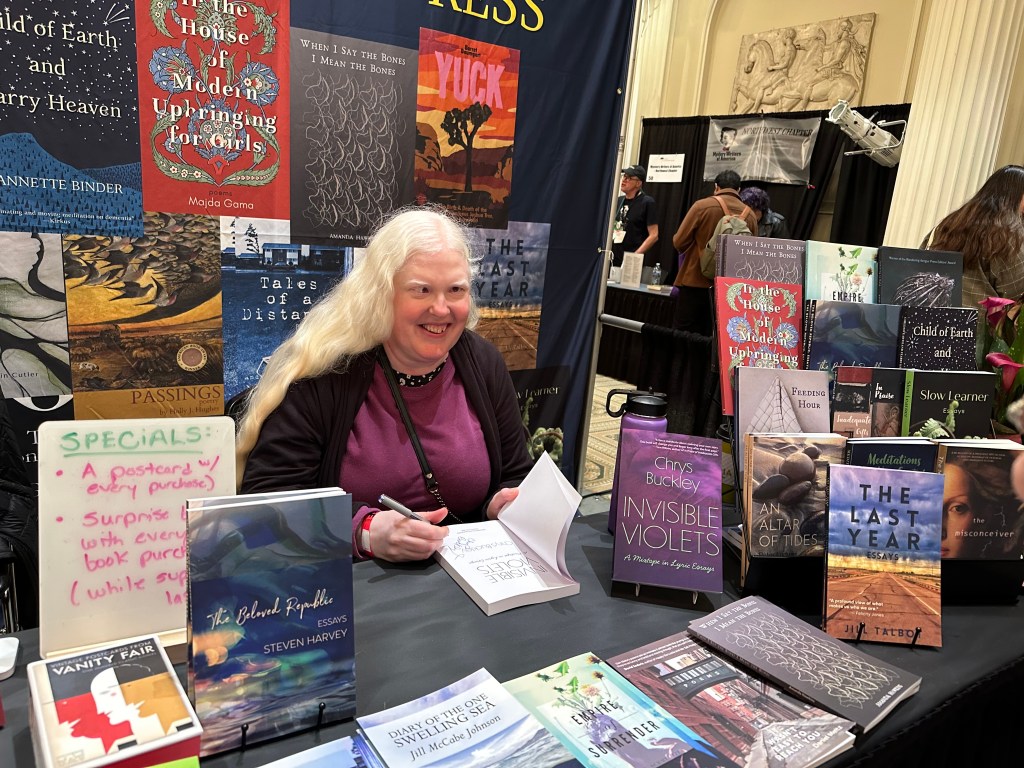
. . . then my forthcoming debut book, INVISIBLE VIOLETS: A Mixtape in Lyric Essays is a book for you. It’s a memoir in 7 essays with a few different themes running through its tracks (essays).
One of the strongest themes is disability (see this post about the disability aspect of the book), and as I write in Track 3: The Caduceus and the Muse:
Not all my writing, not even all my more personal writing, addressed albinism or disability, but I was constitutionally incapable of not writing about music.”
Music is all over this book. Obnoxiously so, even. Music was such a saving force in my life when I was young, and I hope my book evokes that particular sense of connecting with music as a teenager and how that resonates and evolves long after adolescence. How music can reach you when you’re an isolated and outcast kid in a way nothing else can reach you. How music can buoy you when you’re in your twenties and finding your way in the world. How music will always be with you, through all the ups and downs of adult life, as your tastes expand over time. I hope I’ve done a decent job of capturing something that feels beyond and before words.
Your particular favorite genres might be different from mine, and I hope that what I’ve written, while deeply specific, speaks to feelings that transcend genre. Still, you might be especially drawn to this book if you are or were a fan of ’90s rock, especially any of the many musical projects of Chris Cornell, to whose memory the book is dedicated. Almost every band that was on the Singles soundtrack is in the book. The artists and genres mentioned lean grunge and heavy and rock, and there’s also modern pop, singer-songwriter girlies across the ages, classic rock, and weirdly mentions of two very different artists doing covers of Joni Mitchell songs.
Again, though, my hope is that even when our specific tastes and faves differ, the feeling of the primacy of music that infuses this book will still resonate with you as you read.
I’m working on book playlists based on musical references and allusions in the book. One is a maximalist version that’s over the top, excessive, and 1.3 days long. The other is an abridged version that I’ve so far only been able to whittle down to 100 songs, which seems long for an abridged version but might have to stand as is. I’m also working on a word cloud of all the music in the book. So those will be incoming at some point before my book launch on March 13th!
Music as a theme is over-the-top, excessively prominent in these essays:
Track 3: The Caduceus and the Muse
Track 5: Can’t Change Me: An Unnatural History of My Names
Track 7: Distant Lights
Acknowledgments
Music as a theme is central in these essays:
Track 4: August is a Burnt Burgundy-Violet Haze
Track 6: Reasonable Doubt
Disability is present but more peripheral in these essays:
Track 1: Invisible Violet: On Seeing and Not Seeing
Track 2: Blue Alchemy
~~~
For all the book details, check out the INVISIBLE VIOLETS page!
This post is part of a series, published the second Tuesday of every month, where I think about who my book is for.
~Chrys
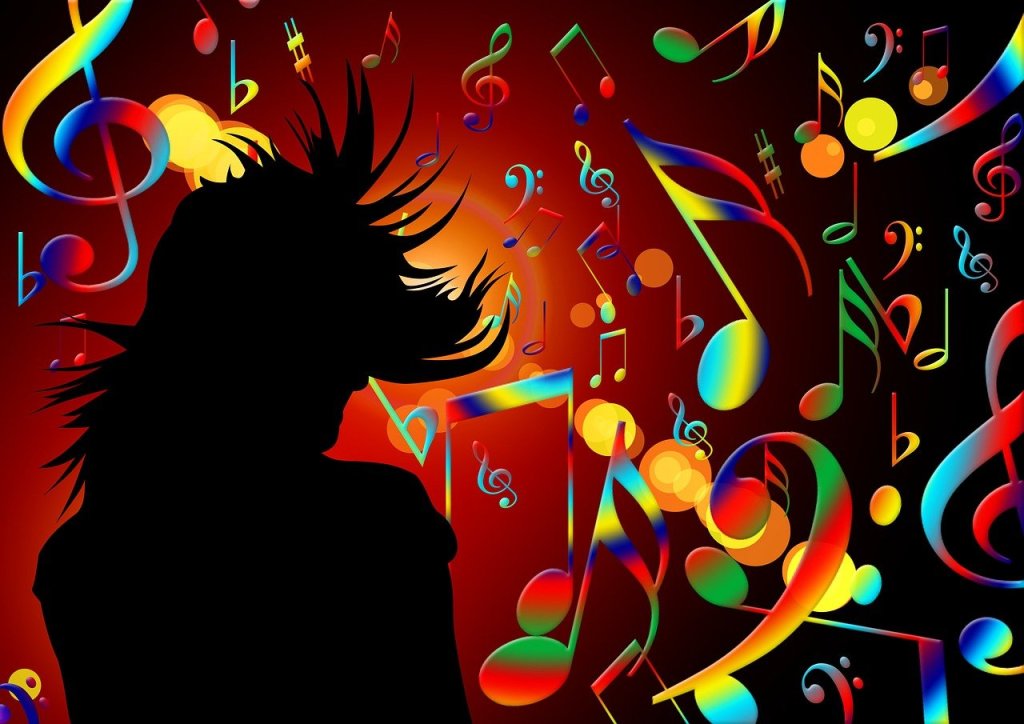
Image Description: a silhouette of a person with hair flying like they’re head banging, with music symbols in the background, including treble clefs, bass clefs, sharp symbols, flat symbols, and music notes.



 Chrys Buckley