Much of what I’ve posted in this portfolio relates to my work at Ooligan Press or for classes in the Book Publishing master’s program at Portland State University, and this post is a bit different. Once my own book, Invisible Violets, was acquired by Wandering Aengus Press and I did the interior design for my own book (more about that here), the Wandering Aengus Press publisher, Jill McCabe Johnson, hired me to do the press’s book interiors as well as some book jacket work for both WAP and its imprint, trail to table press.
So, here is a sampling of some pages from my first Wandering Aengus Press book interior, for A Broken Russia Inside Me by my pressman A. Molotkov. A Broken Russia Inside Me launches on October 27th at Annie Bloom’s Books in Portland. In addition to the interior book design, I also get to be the conversation partner to A. Molotkov at the launch event!
I’m so excited about this book, and when it gets a bit closer to launch date, I’ll come back and include the cover and links to the book for those who want to pre-order!
It isn’t typical for authors to design their own books when they’re traditionally published, but with small presses, it sometimes happens. Invisible Violets is my debut book, and my publisher, Jill McCabe Johnson of Wandering Aengus Press, gave me the option to do the interior design and layout. Jill knew I’d done design work for Ooligan Press and for classes, and had checked out this Portfolio page before offering that option.
First, I designed my book interior as part of my Advanced Book Design class, the final design class in my grad program. The requirements for that were different from what my publisher needed, so I ended up with two versions.
The book interior for the class was in color, had to include images, and had to have an index. Though my book is a memoir in essays and might not seem like it lends itself to an index, I immediately knew mine would be a pop culture index, for all the song, album, TV show, band, book, poetry and movie references and allusions. At the time of this version, I didn’t have any blurbs yet and some things on the copyright page were TBD.
Here is a sampling of the glorious interior with images and including the excessive and obsessive index:
Then there was the real book, in black and white, without any images or index, and with the flower used as a section break marker (the technical term is “dinkus”) replaced by a more standard glyph. This version has real blurbs and the full copyright page.
In both versions, the type is larger than typical. I expected many of my readers would have low vision, so while I didn’t go full-on large print, I did up the type size. Both versions were a blast to design because there were all sorts of fun things like section breaks and footnotes and subheadings to design around.
Here is a sampling form the actual interior of the IRL book:
The best part of all of this—well, other than being able to control the layout of my book and obsess over every detail of design, knowing there are absolutely zero widows or orphans in my book and I like the look of all the pages—is that my publisher liked my work, and has hired me to do all the interiors at Wandering Aengus Press!
If you’re perusing this portfolio and know me as an author, you might recognize the book title in this portfolio entry as the title of my book.
Yes, I designed my own cover. Sort of kind of on accident. This post will be both portfolio samples and story.
My publisher, Jill McCabe Johnson of Wandering Aengus Press, offered me the option to design my own interior when the press acquired my manuscript. Jill knew I’d done some interior work for Ooligan Press, and also looked at the samples that were currently on this digital portfolio. I said yes immediately, as interior book design might be my happiest place in the publishing process and I wanted the creative control over how my book would look.
Then, last spring, I took the final book design class in my grad program in Book Publishing, Advanced Book Design. We each had to pick a book early in the term as our Main Book Project, either something in the public domain or something we had the rights to. Since I knew I’d be designing my interior, I asked the professor, Elaine Schumacher (she’s amazing), if I could just use my own book manuscript. She said yes.
That meant I had to design a lot of covers for it.
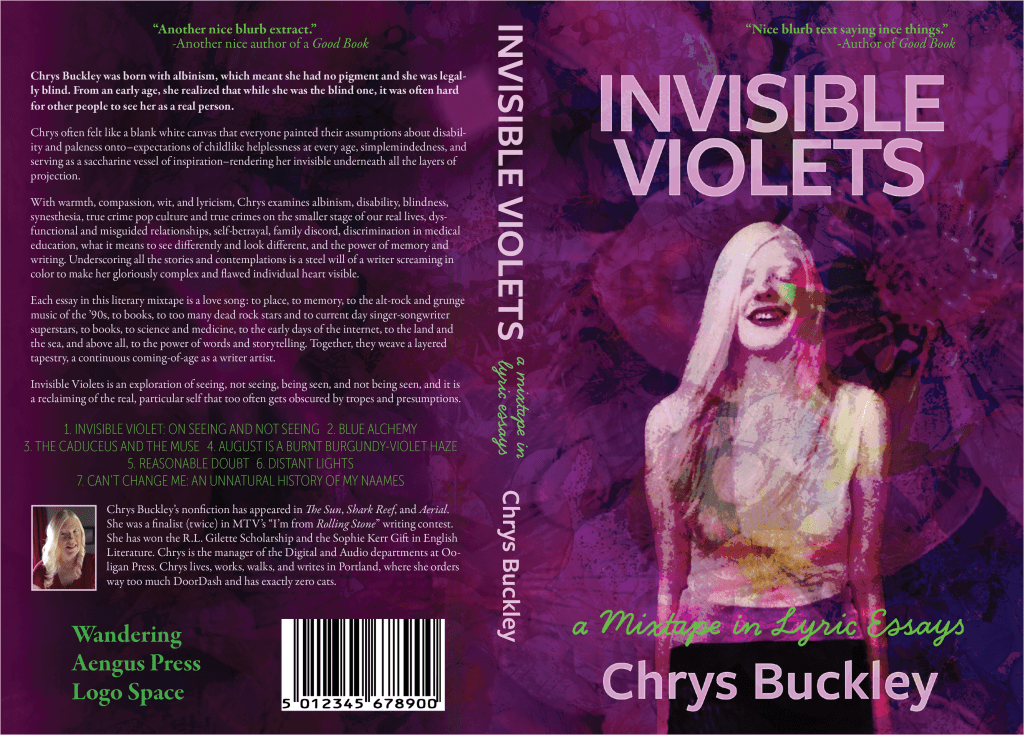
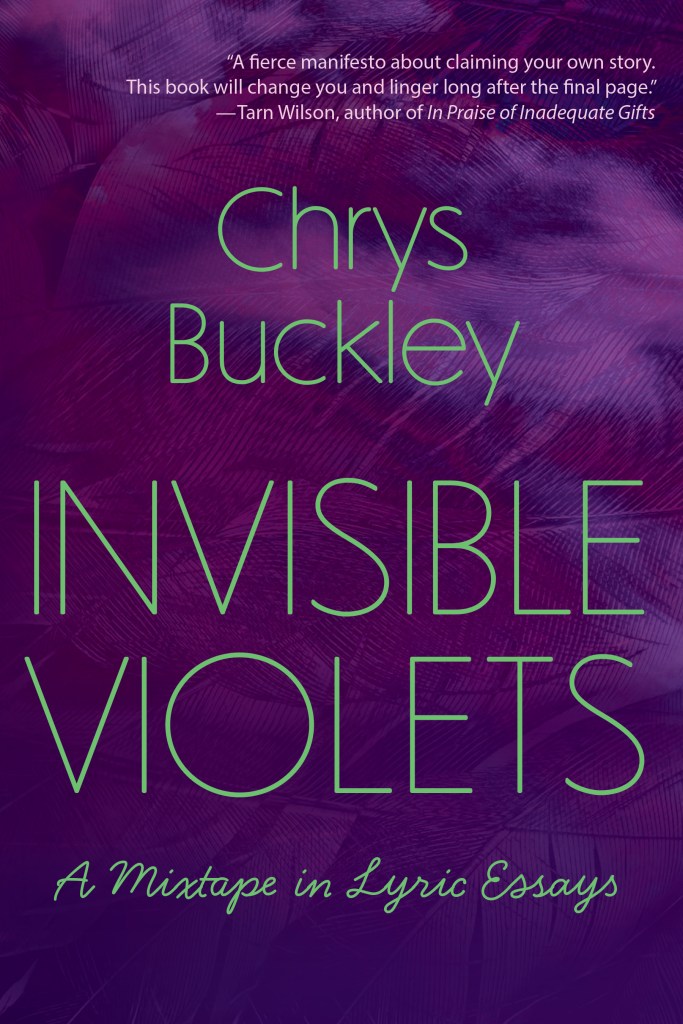
First were the image-based covers. From three mocked-up concepts, I had to develop one into a full jacket. For this one, I was sort of going for something that looked like an album cover. The picture of me was taken by Rick Guidotti of Positive Exposure. (He’s in the book, too.)
Here is the image-based cover and full jacket:
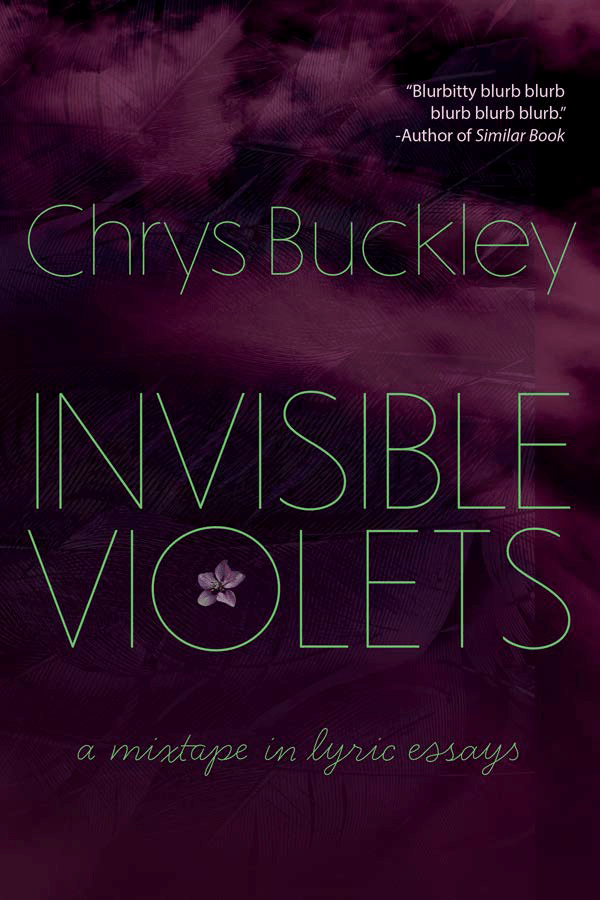
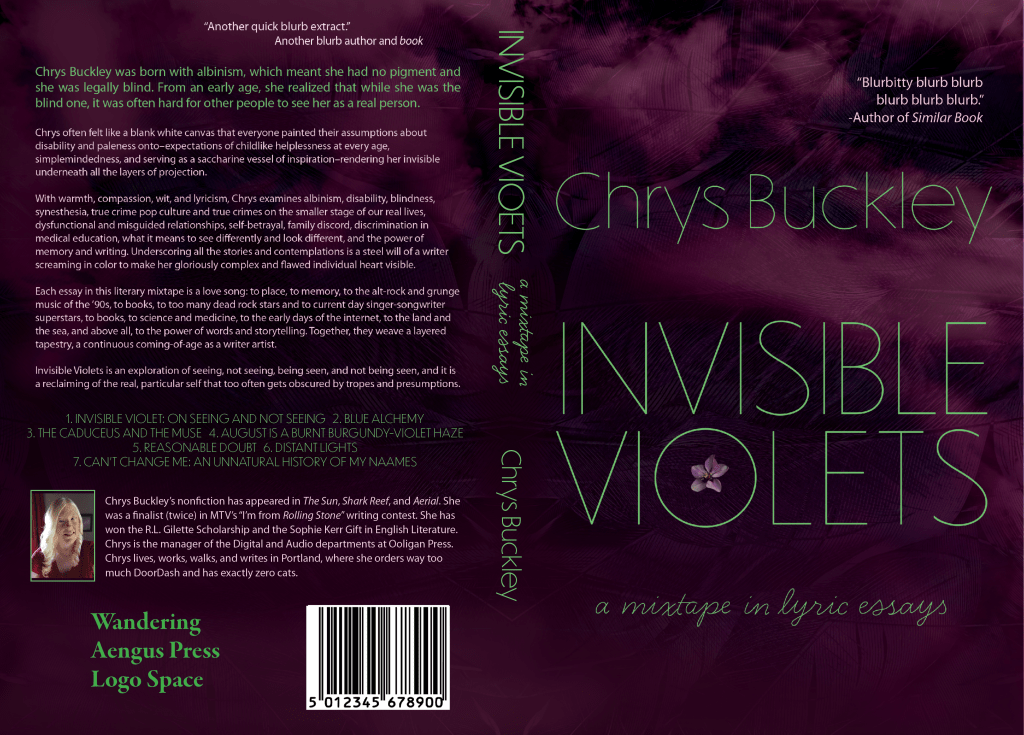
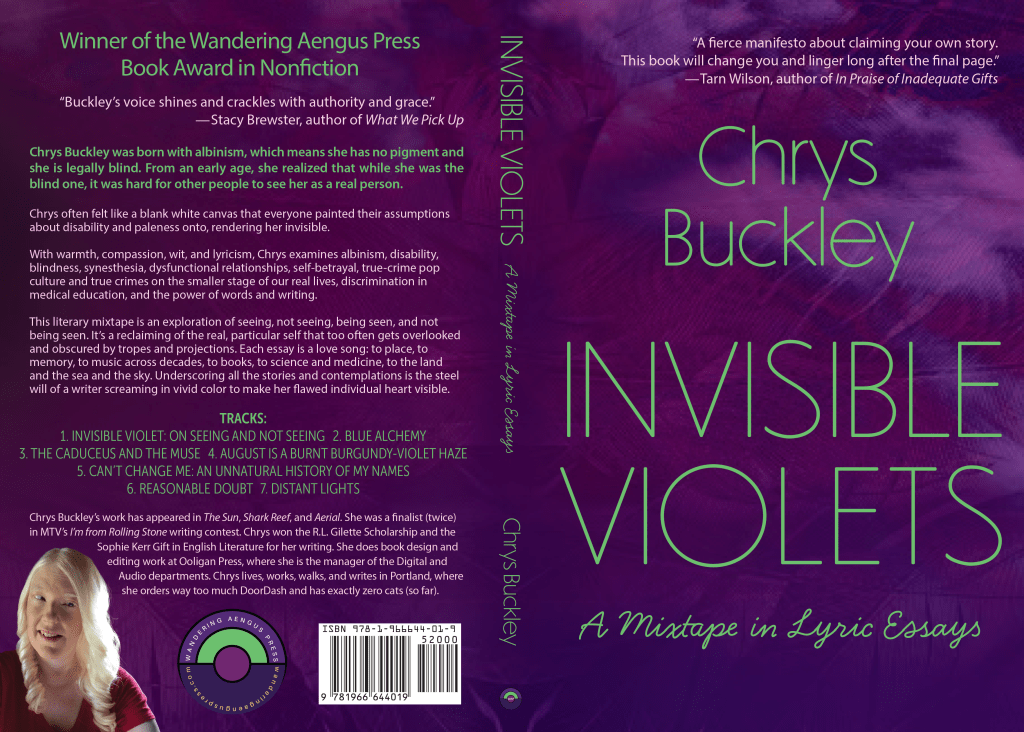
Then we went through the same process, but with typographic covers. We each came up with three concept mock-ups. From there, we had to develop one into a full jacket. This was less familiar territory for me, and just came from playing around with textures in Photoshop, using the tools I was learning in the class.
Here’s the cover and full jacket for the typographic cover:
While I was taking the class, Jill asked about ideas for cover designs, and I said I was having to design some for my grad program anyway, so I’d send her them when I was done. She could then see if she wanted to use either of them, or scrap both and start from scratch. Full disclosure: I expected her to scrap both. I’ve never thought of myself as a cover designer, even though I’ve had to do it for several classes, as evidenced throughout this portfolio.
Jill chose to go with the typographic cover. Based on her feedback, as well as some lessons learned from printing a test copy (a requirement for the Advanced Book Design course), I made lots of adjustments and tweaks. Then, of course, we also swapped out real blurbs for my placeholders, and added the actual Wandering Aengus Press logos and real bar code.
Here is the final cover and jacket, what ended up on the actual book:
What this all means is that now my cover is the part of my book I feel the most insecure about. I’ve gotten a lot of compliments on it, though, mostly from people who have no idea I designed it myself. And my publisher wants me to do some jacket work for their press. And I like my cover, even when I feel insecure about how inexperienced a cover designer I am, so there’s also that.
There were a lot of things the final interior needed that the galley didn’t, like widow/orphan control. There were also several elements to the text of this book that would take some extra design finesse: poetry, bulleted lists, numbered lists, numbered lists with paragraphs within some of the items, text messages, quoted source material, vignettes, and the text reproduction of a funeral program.
In addition to the text elements, we decided during the interior design process to add a Lakota spider image as a chapter opening ornament, and a four-pointed star as the section break glyph (dinkus in design jargon). It was challenging as I was still fairly new to book design and hadn’t worked with images in these exact ways before, and it took some problem-solving, and I’m really pleased with and proud of the results.
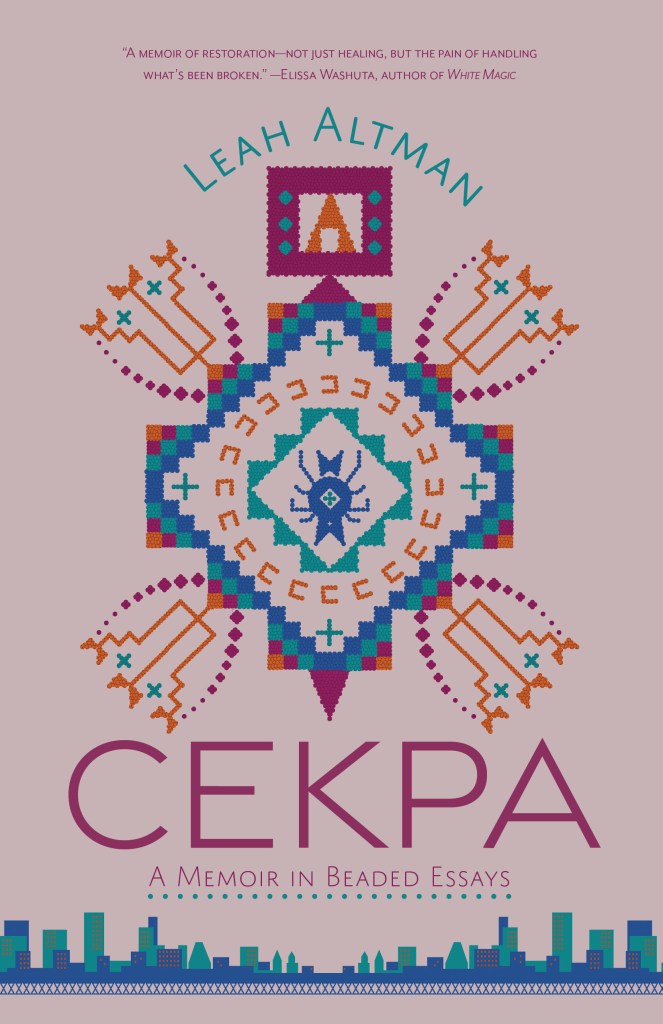
Here is the cover of Cekpa. It was designed by my Ooligan Press colleague Alex Devon, whose work you can see at mothinthemargins.wordpress.com! To be extra clear, this cover is NOT my work—I wish!—it’s here to add some visual flavor to the post, and as a chance to plug Alex’s work! Also, the book is really, really good and you should all read it!
A galley is what is sent to people to blurb or review the book prior to publication. The design process for a galley is much more loose than it is for a final interior. Widows and orphans and runts are allowed, some front or back matter may not be included or finalized, and the fonts in the interior won’t have much at all to do with the eventual cover fonts, because a galley can be started and finished before a cover is finalized.
Here’s a representative sampling of my work on the Cekpa galley interior:
Here is the cover of Cekpa, in case you’re interested. It was designed by my Ooligan Press colleague Alex Devon, whose work you can see at mothinthemargins.wordpress.com! To be extra clear, this cover is NOT my work—I wish!—it’s here to add some visual flavor to the post, and as a chance to plug Alex’s work! Also, the book is really, really good and you should all read it!
The final project for WR 571 Typography, Layout, and Production was to re-design From Knowledge to Power (K2P), published by Ooligan Press in 2021. We worked with the first three chapters.
The biggest challenge with designing this book was that it contains several illustrations, color plates, images, and boxes. (There are also tables, but we didn’t have access to those.) Working on this project was good practice in working with an image-heavy, footnote-laden text, and using grids in InDesign.
Cover design isn’t my specialty—book interiors are!—but here’s my cover:
Fun fact. Some of you may know that I did my undergrad in Biochemistry at Portland State, and back in that life, not only did I take a handful of classes from K2P’s author, John Perona, I also did research in his lab for two years. While I was never good at bioinformatics research, I did then and always will have great respect for John, his teaching, and his passion for climate change education. I have fond memories of attending his climate talks at the Kennedy School back when I worked in his lab, and those talks eventually became this book. So, I feel an extra layer of connection to K2P.
With no further ado, here’s a sampling of the interior. I’m including the front matter as well as some representative pages of the interior that demonstrate my work with illustrations, boxed text, photographs, and footnotes.
For WR 571 Typography, Layout, and Production, we worked with a poetry collection called Echoes of Rainfall.
One of the biggest challenges with this project was to keep the poet’s intended structure. With a couple of longer lines for the trim size, there was a balance to strike between readable font sizes and not introducing new line breaks.
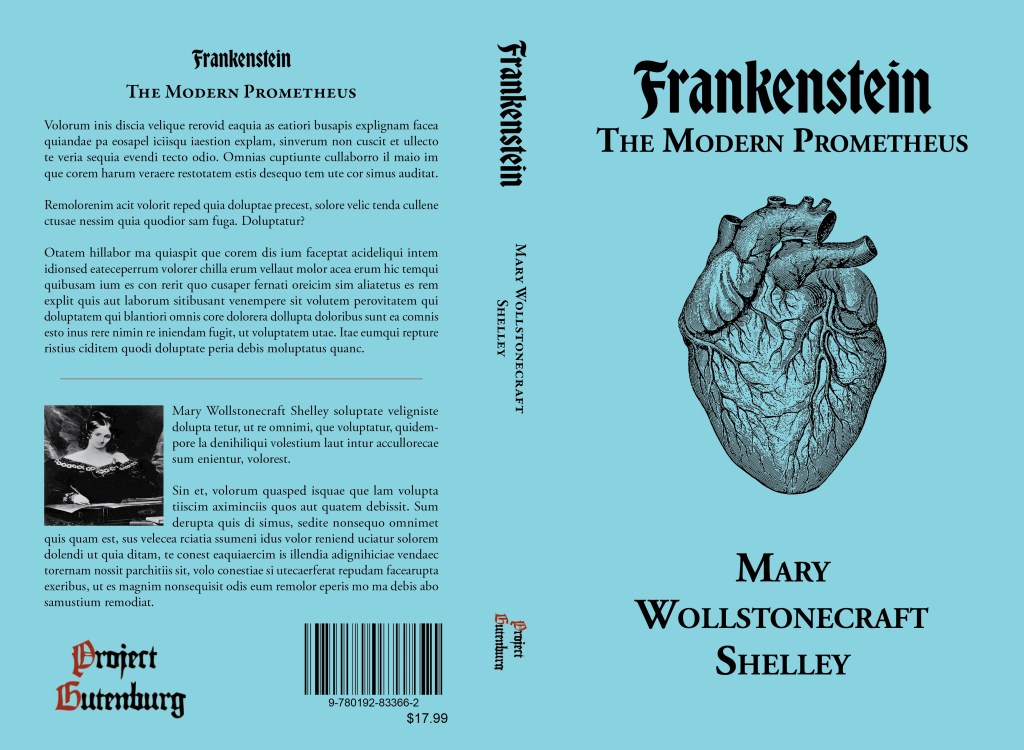
For WR 571 Typography, Layout, and Production, we worked with the Project Gutenberg version of Frankenstein.
For this project, I designed both a cover and an interior. I’m no cover designer, but I’ll share mine anyway:
As for the interior, we were only tasked with designing the first five chapters of Frankenstein, but I got a bit obsessive and did the whole book.
Since I can’t seem to post anything without mentioning music, I must say that every time my professor mentioned the first five chapters of Frankenstein, I thought of The National’s album The First Two Pages of Frankenstein. Listen on Apple Music while perusing this lengthy interior.
One of the biggest design challenges was that large portions of the book, both entire chapters and sections within chapters, are comprised of letters. I wanted them to stand out from the rest of the text, but also to be readable, especially considering their lengths.
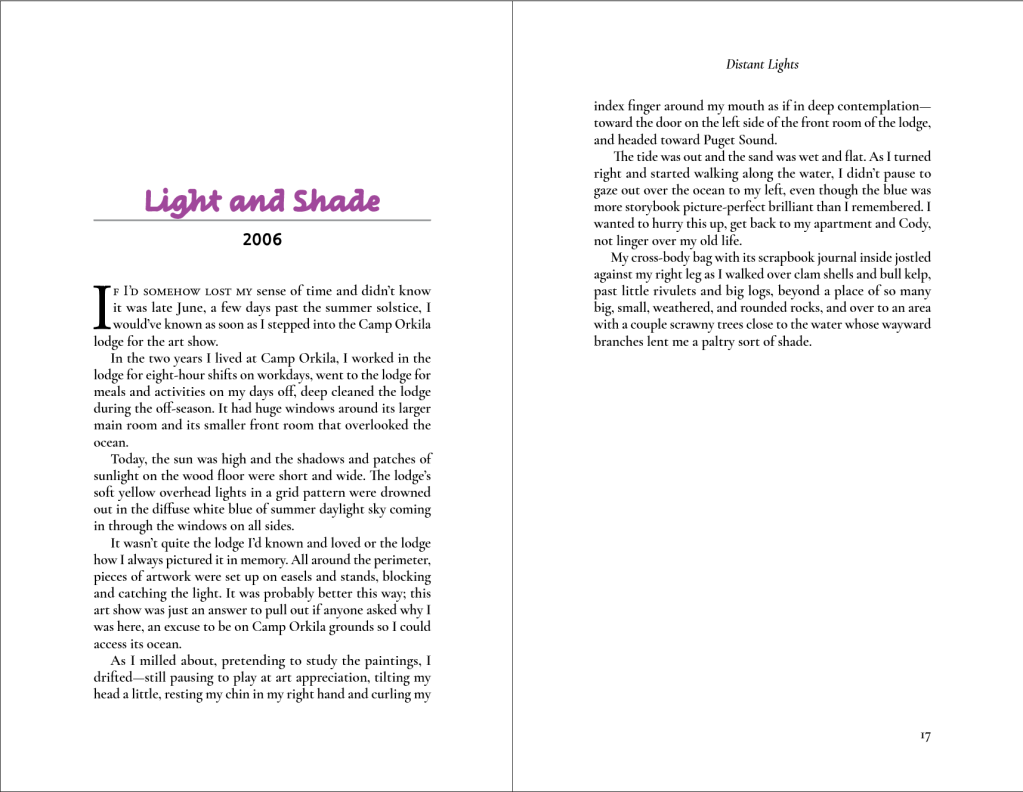
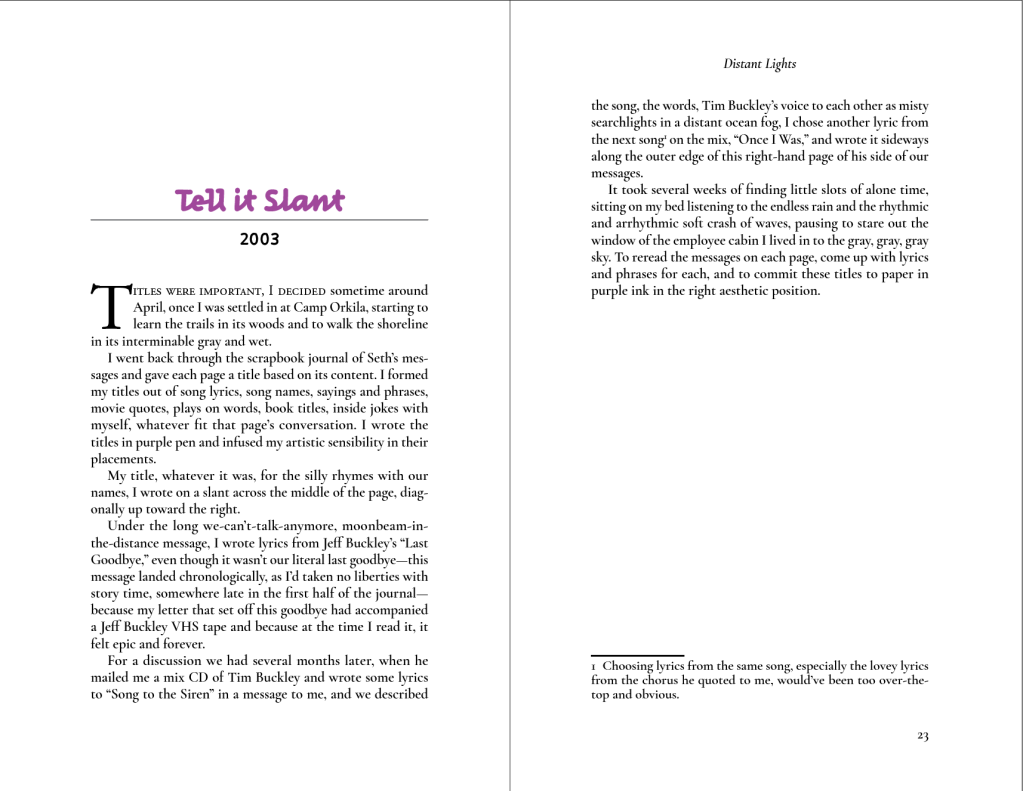
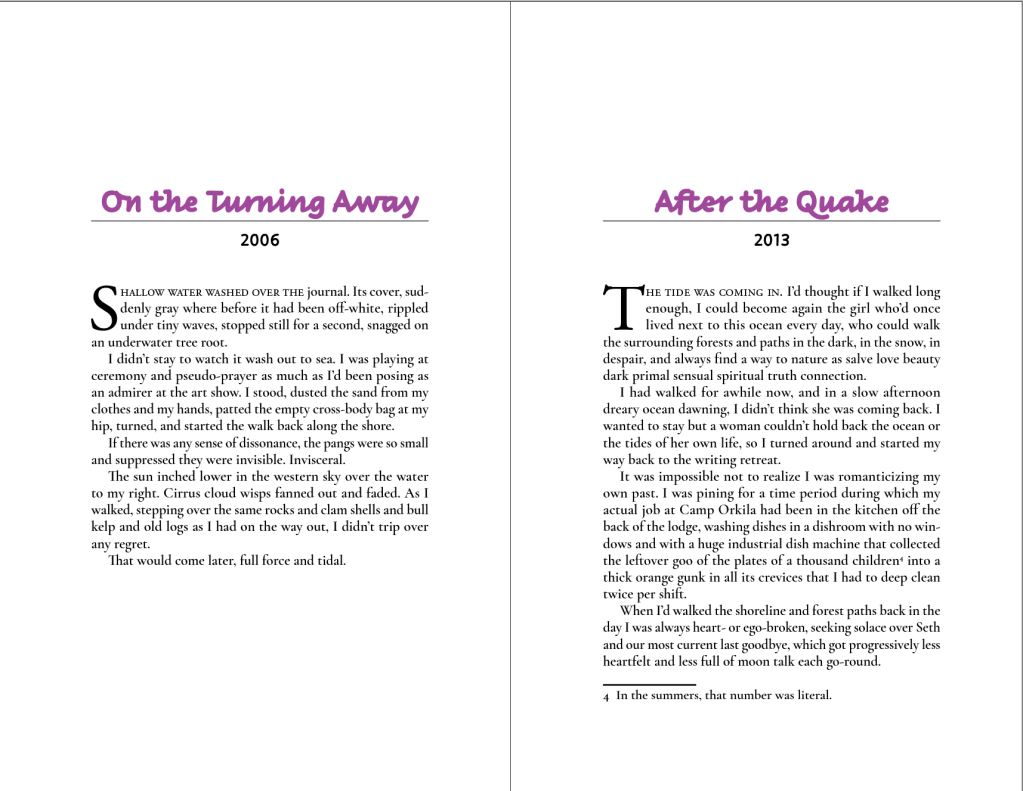
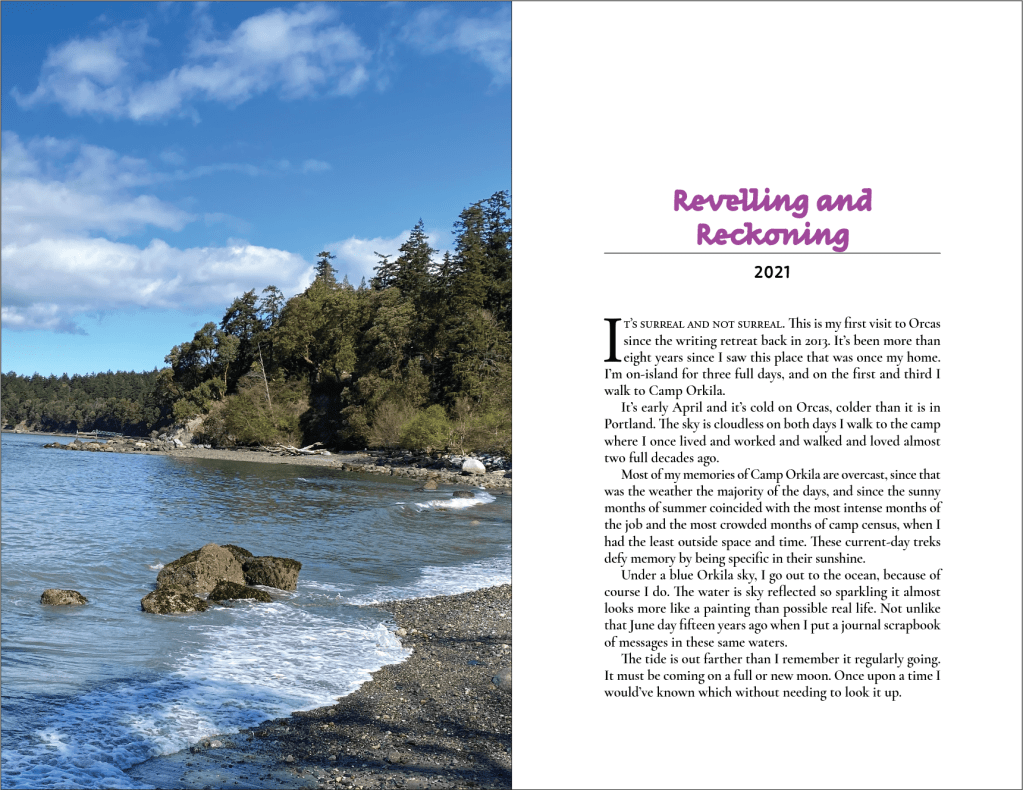
This was my final project for WR 562 Book Design Software. We each had to design a chapbook. I decided to layout one of my personal essays. I chose this one, “Distant Lights,” because it had the most opportunities for design practice: sections that I could make into chapters in a chapbook, section breaks within the chapters, footnotes, and photos.
This essay features several mentions of the album Euphoria Morning by Chris Cornell (originally titled Euphoria Mourning), so feel free to listen to Euphoria Morning on Apple Music as you look through this portfolio project.
Because this is my original, unpublished writing that delves into deeply personal topics, I will share a photo of my cover design and selected photos of the interior, but won’t share the full text.
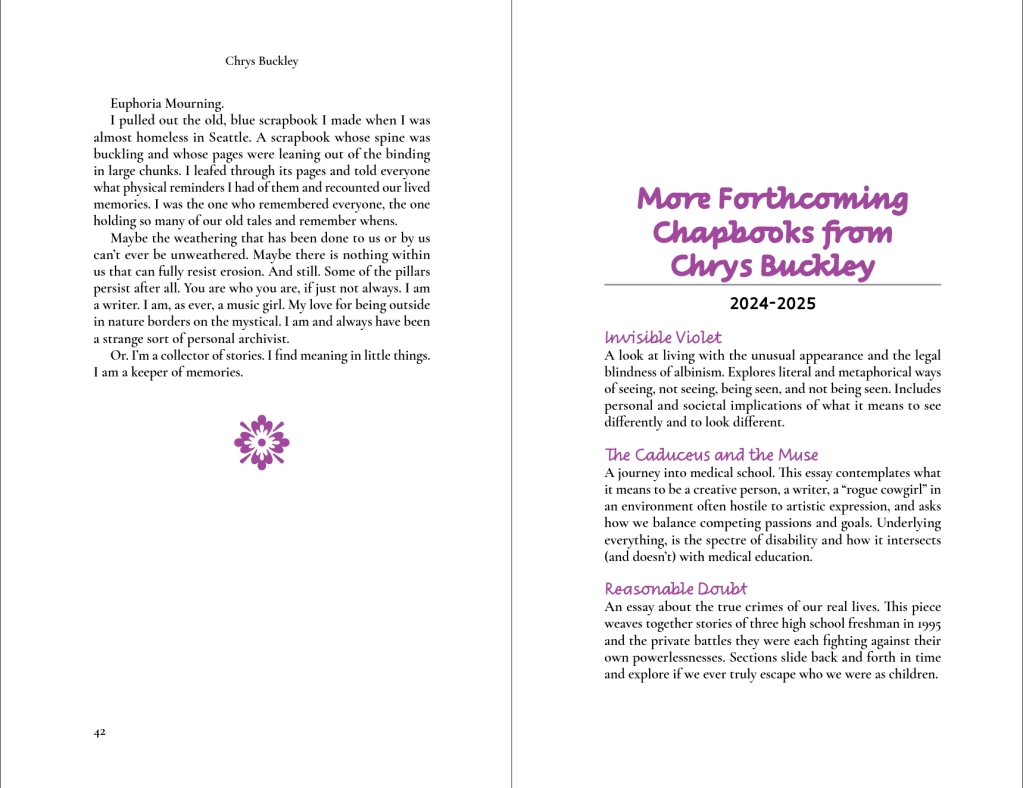
Because I intended to print some copies of my chapbook, using InDesign’s “Print Booklet” feature, I needed a page count divisible by 4 (or divisible by 4 minus 1 if I wanted a blank last verso page), I added this extra page advertising future chapbooks.
And here is an iPhone photo of the printed version: