Blindness and Disability, Music, My Books, Writing

If You Are a Music Fan . . . You Might Like INVISIBLE VIOLETS

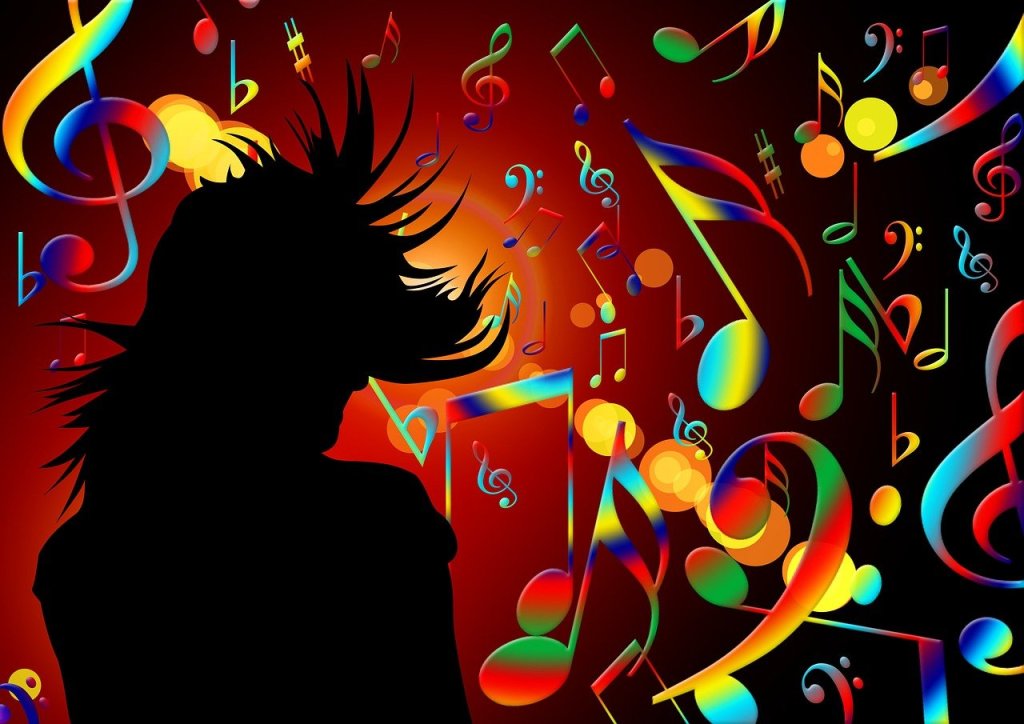
a silhouette of a person with hair flying like they're head banging, with music symbols in the background, including treble clefs, bass clefs, sharp symbols, flat symbols, and music notes.

If you know (and everyone you know knows) you talk about music too much . . .

If you ever had the urge to cover a driveway or sidewalk with chalk drawings of band logos, song names, and lyrics . . .

If you credit music for getting you through your toughest times and hardest heartbreaks . . .

If you frequently have the urge to blast music while driving (or while riding in a car if you’re like me and can’t drive) and sing along at the top of your lungs . . .

If you remember your life by what albums you were listening to when and understand your life through lyrics . . .

If you were the kind of kid who answered parental questions about how the latest visit to the doctor’s office went with what songs you heard while in the waiting room . . .

If you love the 60 Songs that Explain the ’90s podcast (now 60 Songs that Explain the ’00s) or would listen to a similar podcast for your specific favorite music decade . . .

. . . then my forthcoming debut book, INVISIBLE VIOLETS: A Mixtape in Lyric Essays is a book for you. It’s a memoir in 7 essays with a few different themes running through its tracks (essays).

One of the strongest themes is disability (see this post about the disability aspect of the book), and as I write in Track 3: The Caduceus and the Muse:

Not all my writing, not even all my more personal writing, addressed albinism or disability, but I was constitutionally incapable of not writing about music.”

Music is all over this book. Obnoxiously so, even. Music was such a saving force in my life when I was young, and I hope my book evokes that particular sense of connecting with music as a teenager and how that resonates and evolves long after adolescence. How music can reach you when you’re an isolated and outcast kid in a way nothing else can reach you. How music can buoy you when you’re in your twenties and finding your way in the world. How music will always be with you, through all the ups and downs of adult life, as your tastes expand over time. I hope I’ve done a decent job of capturing something that feels beyond and before words.

Your particular favorite genres might be different from mine, and I hope that what I’ve written, while deeply specific, speaks to feelings that transcend genre. Still, you might be especially drawn to this book if you are or were a fan of ’90s rock, especially any of the many musical projects of Chris Cornell, to whose memory the book is dedicated. Almost every band that was on the Singles soundtrack is in the book. The artists and genres mentioned lean grunge and heavy and rock, and there’s also modern pop, singer-songwriter girlies across the ages, classic rock, and weirdly mentions of two very different artists doing covers of Joni Mitchell songs.

Again, though, my hope is that even when our specific tastes and faves differ, the feeling of the primacy of music that infuses this book will still resonate with you as you read.

I’m working on book playlists based on musical references and allusions in the book. One is a maximalist version that’s over the top, excessive, and 1.3 days long. The other is an abridged version that I’ve so far only been able to whittle down to 100 songs, which seems long for an abridged version but might have to stand as is. I’m also working on a word cloud of all the music in the book. So those will be incoming at some point before my book launch on March 13th!

Music as a theme is over-the-top, excessively prominent in these essays:
Track 3: The Caduceus and the Muse
Track 5: Can’t Change Me: An Unnatural History of My Names
Track 7: Distant Lights
Acknowledgments

Music as a theme is central in these essays:
Track 4: August is a Burnt Burgundy-Violet Haze
Track 6: Reasonable Doubt

Disability is present but more peripheral in these essays:
Track 1: Invisible Violet: On Seeing and Not Seeing
Track 2: Blue Alchemy
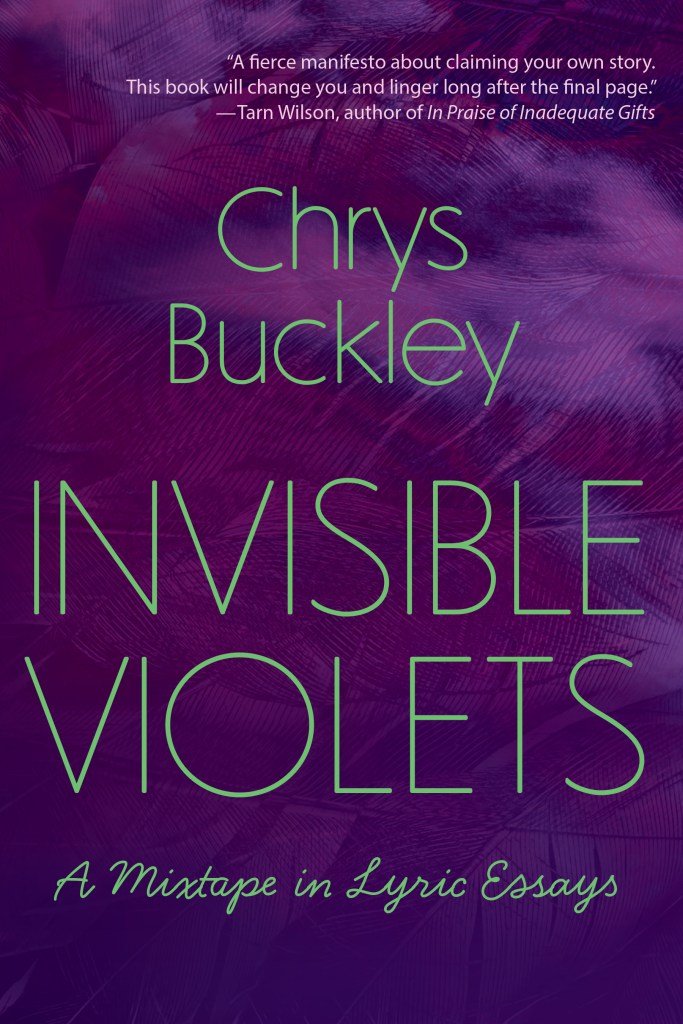
Cover image of Invisible Violets: A Mixtape in Lyric Essays by Chrys Buckley. Words are green against a textured background of different shades of purple. Near the top of the cover, there is an author blurb that reads, "A fierce manifesto about claiming your own story. This book will change you and linger long after the final page." This blurb was written by Tarn Wilson, author of In Praise of Inadequate Gifts.

~~~

For all the book details, check out the INVISIBLE VIOLETS page!

This post is part of a series, published the second Tuesday of every month, where I think about who my book is for.

~Chrys

Image Description: a silhouette of a person with hair flying like they’re head banging, with music symbols in the background, including treble clefs, bass clefs, sharp symbols, flat symbols, and music notes.

Blindness and Disability, My Books, Writing

If You Have a Disability . . . You Might Like INVISIBLE VIOLETS

array of accessibility icons, including wheelchairs, canes, guide dogs, pregnant people, and question marks for less apparent disabilities

Or if you are disabled.

Or if you’re a person with a disability.

Or if you are living with disability.

Or if you experience disability.

Or if you have lived experience of maybe sometimes possibly experiencing this thing in your life that we all must put lots of words in front of to make it as distant as possible that we maybe sometimes possibly in whispered voices refer to as disability.

Okay, I’m obviously getting a bit over the top with that last one (though it does sometimes feel that way). My point, though, is that no matter what language you use, you are welcome here and you might find resonance in my upcoming debut essay collection, INVISIBLE VIOLETS: A Mixtape in Lyric Essays.

I’ve been thinking a lot lately about who my book is for. It’s going to publish in two months, and so my thinking has had to shift more outward now that all the proofing is done and it’s on its way out into the world. (Yay! And eeeeeeeek!)

The most prominent theme running through my book is disability. So, if you are a disabled reader (or any other particular phrasing that feels right to you), this book is for you.

Even though we all experience disability differently (even if we have the same disability), I hope my words will give you that “oh yes” and “she gets me” sense while reading, a sense I’ve experienced while reading authors who have disability in common with me.

I hope my words will give voice to internal and external dynamics in a way that articulates the specific struggles and joys of disabled life in a way that makes you feel seen and understood, as other books have done for me.

I hope reading my book lights a fire under the part of you that wants to write your own story, if you’re so inclined, because there are so few books about disability by disabled people out there and there’s room for so many more, and we need more.

Not every essay in my collection has disability as its central topic. Sometimes it’s a central theme, and other times it isn’t. Because that reflects reality. Sometimes it’s all-consuming, and other times it’s more like background noise.

Disability as a theme is most prominent in these essays:
Track 1: Invisible Violet: On Seeing and Not Seeing
Track 3: The Caduceus and the Muse
Track 5: Can’t Change Me: An Unnatural History of My Names
Track 6: Reasonable Doubt

Disability is present but more peripheral in these essays:
Track 2: Blue Alchemy
Track 4: August is a Burnt Burgundy-Violet Haze

Our experiences won’t be exactly the same. They might even be wildly different. Either way, I hope there are lines and paragraphs and passages and perhaps whole essays that harmonize with your experience and give you that sense of recognition that sometimes comes with reading.

Cover image of Invisible Violets: A Mixtape in Lyric Essays by Chrys Buckley. Words are green against a textured background of different shades of purple. Near the top of the cover, there is an author blurb that reads, "A fierce manifesto about claiming your own story. This book will change you and linger long after the final page." This blurb was written by Tarn Wilson, author of In Praise of Inadequate Gifts.

~~~

For all the book details, check out the INVISIBLE VIOLETS page!

~Chrys

Image Description: an array of accessibility icons depicting people in wheelchairs, people using canes, people with guide dogs, pregnant people, people with small children, and some questions marks (which I believe represent less apparent disabilities).

Music, Writing

Creativity Goals Check-In September 27, 2020

goals9

Goals from Last Week – How Did it Go?

Welllll, the fact that I’m writing this post a day late should say something. It was probably the roughest week yet.

Writing

  • work on Moonchild (writing project) all seven days – four.
  • work on blog at least five days – three.
  • at least seven sessions of digitizing old writing – I don’t think I did any?
  • craft and send an important tweet – I did this one. Now that it’s done I can say what it is. I tweeted my leaving med school post at Taylor Swift. I knew it was a long shot that she would ever see it, but her album, and especially “exile” has become so inextricably linked to me leaving school, and to me telling people I’m leaving school, that I wanted to share. I think that years in the future when I look back and think of folklore, I’ll think of leaving school and telling my story.

Music

  • seven guitar practice sessions – two.
  • get up through song 100 of Book One of my Hal Leonard Guitar Method Complete Edition book – which means FINISHING BOOK ONE! – nope.
  • seven piano practice sessions – two.
  • Continuing on my quest to catch up on Technic and Composition sections previously skipped in Keyboard Musician for the Adult Beginner book, I will do the composing for Unit 4, technic and compositing for Unit 5, and technic and composing for unit 6. Then I’ll be all caught up and can continue forward – nope.

Lifestyle

  • sleep without the phone (a struggle you can read about here) – this will put me at 189 nights (27 weeks) in a row – yes. Getting extremely tenuous.
  • write Morning Pages every day – four.
  • don’t look at phone until after Morning Pages – this is back on – four.
  • Finish The Book of Longings by Sue Monk Kidd – I’m very close to the end – and start a new book. Not sure yet what I’ll start with, as I’m in a few different book clubs and have so much I want to read – DONE, and I also read 11/22/63 by Stephen King, which is 850 pages, this week.
  • do an Artist Date – maybe? Maybe some of the reading counted? I don’t know.

Reflections on the Week

Continue reading “Creativity Goals Check-In September 27, 2020”

Samples, Writing

(Overdue) Writing Update: Publication in Aerial

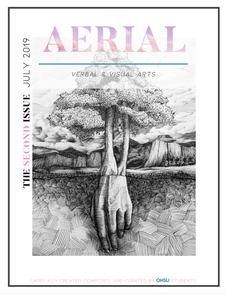
screen-shot-2019-07-24-at-11-45-40-pmI was away for a long time, and in that time, I had some writing news and updates that I’m overdue in sharing here.

One of those is that my piece “Living the Dream?” was published in Aerial, the art and literary magazine from OHSU’s School of Medicine.

Knowing that such a magazine existed was one of the many things that drew me to OHSU as a school. I wanted to be somewhere that valued writing and the arts along with all the science-y, clinical-y stuff I love. Since starting school there, I’ve found a good group of people, not only the people who run Aerial, but also a lot of people involved in narrative medicine, humanities in medicine, live storytelling, and so forth.

In fact, this piece came from the final assignment in a Narrative Medicine elective class I took last winter, taught by Dr. Elizabeth Lahti, who is THE narrative medicine, medical humanities person at OHSU. The assignment was to write “25 Things I Know About…” something. The assignment was based on the short story “25 Things I know About My Husband’s Mother” by Louise Aronson from her book A History of the Present Illness. We read this and other stories from this book in our class, and I highly recommend.

Continue reading “(Overdue) Writing Update: Publication in Aerial”